Let an asymmetric hem be a deliberate feature
An asymmetric hem creates different lengths and directions within one garment. Rather than trying to make both sides appear equal, decide how you want that movement to read. Keep the rest of the outfit understandable and check the longest edge during the activities you actually need to do.
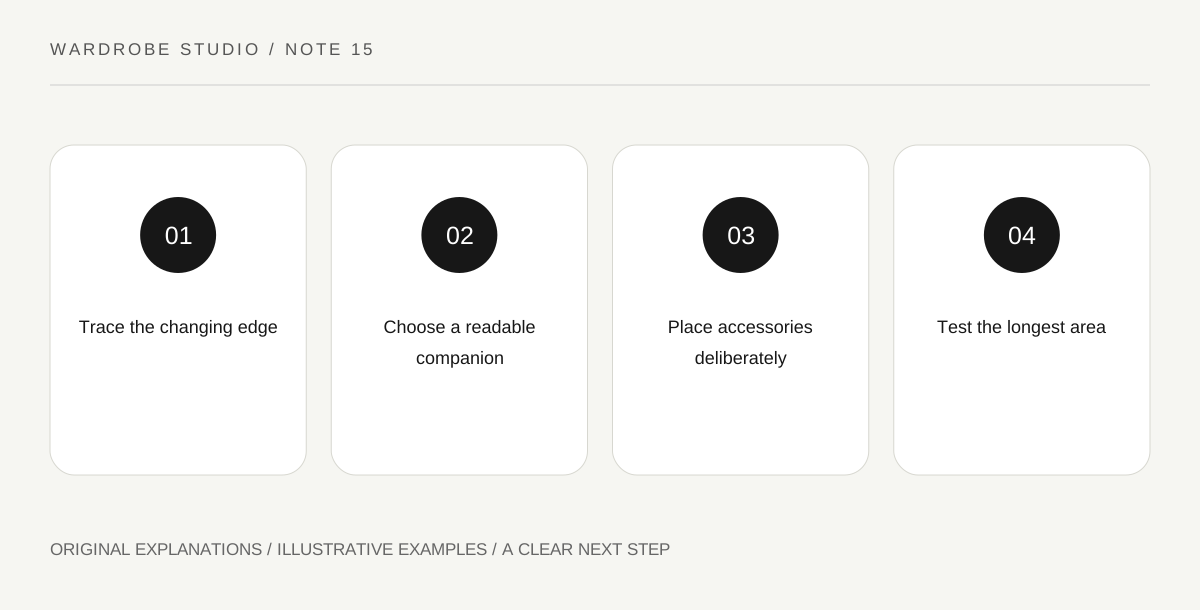
Original explanatory diagram. Read the full method and limitations below.
Identify the kind of asymmetry
A diagonal hem, a side drape and a high-low front-to-back shape create different lines. Trace the garment’s edge visually and notice where it rises, falls or gathers. The word asymmetric does not describe one standard silhouette.
Look at the garment from several angles. A dramatic side detail may be quiet from the front but prominent when walking. Decide whether that changing view is part of what you enjoy. There is no requirement for every outfit to present the same shape from all directions.
A rotating view can reveal where fabric overlaps itself, which may matter more than the longest measurement when deciding how the garment sits.
Choose a companion that leaves the line legible
A plain companion can let the unusual edge remain clear, while another directional detail creates a more complex composition. Begin with the simpler option so you can understand the hem’s role. Add complexity only if it serves your intended effect.
If an asymmetric top is worn over a skirt, inspect where the two edges cross. They can create a deliberate layered shape or an accidental cluster of fabric. Move normally and observe whether the crossing point remains where you want it rather than arranging it only for a still pose.
Avoid requiring symmetry from every accessory
You do not need identical visual weight on both sides to make an outfit feel intentional. A bag, brooch or earring arrangement can introduce another relation, but it should not become a compulsory correction for the garment’s design. Asymmetry can remain visible.
Choose one accessory and observe where it directs attention. A bag at the same side as a long drape may obscure the feature; moving it may reveal it. The aim is to decide what you want seen, not to solve an imagined mathematical imbalance in the wearer’s body.
Check the longest and loosest areas
The longest edge needs to stay clear of the ground and avoid interfering with ordinary movement or equipment. A loose drape can catch even when the shorter side feels convenient. Assess the whole garment through sitting, walking and any relevant transitions.
For a practical exercise, wear the garment with a quiet companion and your real bag. Note where you make adjustments. If the drape repeatedly catches, choose another combination or garment for that activity. A design feature can be beautiful and still unsuitable for a particular day.
Illustrative diagonal top
A wearer has a top with a diagonal hem ending lower on the left. Plain trousers leave the line clear. A crossbody bag covers the long side, so they try a handheld bag instead. After sitting and walking, they notice the long edge catches on a chair arm and choose the top for a different outing with fewer seated transitions.
Practical checks
Optional checkboxes save only in this browser.
Questions that come up
Does an asymmetric garment need symmetrical accessories?
No. Symmetry is one design option, not a corrective requirement. Choose how the accessory relates to the garment and whether the overall effect suits your preference.
Can I judge an asymmetric garment from one front photo?
Only partly. Side and moving views may reveal important drape and access details. Try the actual garment through ordinary movement before deciding whether it fits the intended activity.
References and scope
These sources support the factual background. Examples and exercises are original illustrative teaching material. References do not imply endorsement.
- Getty Museum: Principles of design — Vocabulary for visual weight, emphasis, repetition, balance and proportion used in original outfit exercises.
- Getty Museum: Elements of art — Distinguishing line, shape, color value, intensity, space and texture.
- V&A: Secrets of Balenciaga’s construction — Examples showing that pattern cutting, fabric and construction determine garment form; not a prescription for modern outfits.