Style a pleated skirt by watching it move
Pleats create a changing surface: narrow folds while still, wider areas during movement. Build the outfit around that behavior rather than a single standing photograph. Check the waistband, seated comfort and how the pleats recover, then choose a top that supports the degree of movement you enjoy.
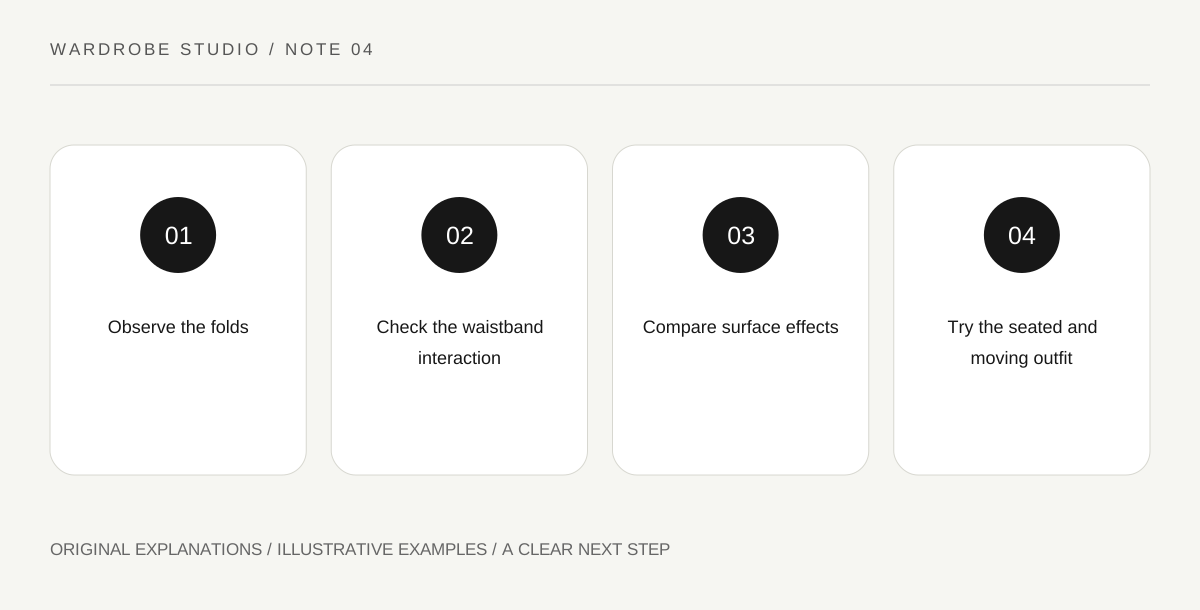
Original explanatory diagram. Read the full method and limitations below.
Observe how the pleats are built
A knife-pleated skirt, a box-pleated skirt and a loosely gathered skirt do not move identically. Look at where the folds begin, how deep they are and whether they are stitched down near the waist. The word pleated alone does not describe the full construction.
Walk a few steps and turn gently in the actual skirt. Notice whether folds open evenly or are restricted by fit or an underlayer. You are observing the garment, not looking for a way to make your body disappear. The useful question is whether the skirt behaves as you want.
Choose a top that works with the waistband
A top that ends near the waistband can leave the pleat structure visible. A longer layer may cover its starting point and produce a different outline. Neither is automatically superior. Try the garment’s actual lengths rather than apply a fixed proportion rule to every skirt.
Look for bunching where layers meet. If the top repeatedly catches in the waistband, consider another fabric or a different wearing arrangement. A standing mirror can miss discomfort that appears after sitting. The connection between garments should remain comfortable without constant correction.
Let texture and sheen do some of the work
Pleats in shiny fabric can create strong light-and-dark changes even when the skirt is one colour. Matte cloth produces a quieter effect. The pleat surface may already supply enough visual activity that a second patterned garment feels unnecessary for the result you want.
Try a smooth plain top against a strongly textured or reflective skirt, then compare a textured top. Keep colour similar if you want to focus on surface. This is an original observation exercise using basic design concepts, not a rule that pleats must be paired with one specific material.
Plan for the skirt’s actual day
Sit in the chair type you expect to use, check access to pockets if present and make sure the skirt does not interfere with your ordinary movement. Follow the garment’s care instructions rather than improvise pressing that could change the folds. Construction and care are linked.
For a practical trial, wear the chosen combination for a short ordinary indoor task. Note whether you adjust the top, waistband or pleats repeatedly. If so, revise that interaction before adding accessories. A pleasing moving shape should also be a garment you can comfortably inhabit.
Illustrative pleat study
A wearer compares a fine-knit top and a crisp blouse with the same matte pleated skirt. The blouse catches at the waistband after sitting, while the knit stays comfortably in place. They prefer the blouse’s appearance but choose the knit for a seated lunch. The decision reflects the day’s activity rather than a claim that one top type always suits pleats.
Practical checks
Optional checkboxes save only in this browser.
Questions that come up
Should pleated skirts always have a fitted top?
No. A fitted top is one option, while a loose layer creates a different outline. Judge the particular lengths, fabric and comfort rather than treating one proportion as universally correct.
Can I iron pleats into a different shape?
Do not assume so. Follow the finished garment’s instructions and seek suitable professional advice when uncertain. Heat and pressing can alter fabric or set folds differently, so styling should not depend on an unsupported care method.
References and scope
These sources support the factual background. Examples and exercises are original illustrative teaching material. References do not imply endorsement.
- Getty Museum: Principles of design — Vocabulary for visual weight, emphasis, repetition, balance and proportion used in original outfit exercises.
- Getty Museum: Elements of art — Distinguishing line, shape, color value, intensity, space and texture.
- V&A: Secrets of Balenciaga’s construction — Examples showing that pattern cutting, fabric and construction determine garment form; not a prescription for modern outfits.
- ACCC: Care labelling on clothing and textiles — Following care instructions for the finished garment rather than assuming treatment from appearance.