Choose a denim-skirt outfit around stride and structure
A denim skirt is a structured garment, and its ease of movement depends on cut, openings and fabric rather than wash alone. Build an outfit after checking how the skirt behaves when walking and sitting. Then choose the kind of upper shape that works with its actual outline.
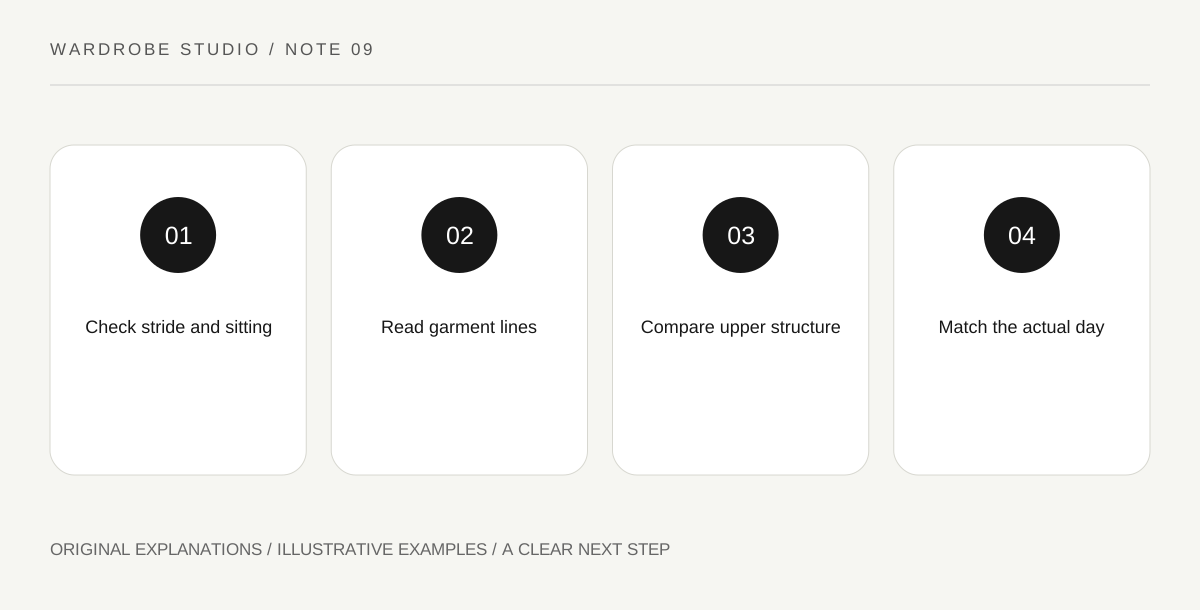
Original explanatory diagram. Read the full method and limitations below.
Understand where movement comes from
A straight skirt may rely on a vent or slit; an A-line cut may provide more room through shape. Stretch content can affect feel, but the finished construction still matters. Do not assume a long skirt is restrictive or a short one automatically allows every movement.
Take normal steps and sit in a realistic chair. Check whether the waistband, opening and seams remain comfortable. A slit’s coverage may change with movement, so assess your preference in use rather than only while standing. You are checking the garment’s suitability, not judging your walking style.
Read the skirt’s strong lines
Denim seams, pockets and panels can be prominent design elements. A central seam may create a clear line, while patch pockets add shapes. Notice those features before deciding that the skirt needs another decorative element. Colour wash is only part of its appearance.
Choose whether to echo a line or contrast it. A simple top with a clear edge can continue the structure; a softer blouse can introduce movement. Describe what changes in the outline instead of assigning a fixed rule to the word denim.
Check the upper and lower fabrics together
A heavy waistband can interact differently with a fine top than with a thicker knit. Look for snagging, uncomfortable bulk or repeated shifting. The skirt may work well with several top shapes, but each needs to be tried with its real fabric rather than imagined from a style formula.
If the top’s details disappear behind the skirt edge, decide whether that matters. You can prefer the quieter result or choose a different length. There is no requirement to make every garment feature visible at once; the outfit is a selection of details rather than a catalogue.
Plan the day’s practical demands
A day involving stairs, cycling or floor-level activity may require a different garment than a seated social visit. Consider the actual tasks and any workplace rules. A styling suggestion cannot make an unsuitable range of movement acceptable for every activity.
For an exercise, create two outfits around the same skirt: one with a soft upper layer and one with a structured one. Walk and sit in each, then compare the visual direction. Keep the movement result separate from the style preference so you understand both reasons behind your choice.
Illustrative structured skirt study
A wearer likes a long straight denim skirt with a front opening. They check a normal stride and seated coverage, then compare a soft blouse with a short boxy top. Both move comfortably, but the boxy top repeats the skirt’s panel structure. They choose that combination for a graphic effect and avoid assuming the darker wash alone made it more polished.
Practical checks
Optional checkboxes save only in this browser.
Questions that come up
Does stretch denim guarantee comfort?
No. Waist construction, cut, seams and openings also matter. Try the finished garment in the movements you need rather than relying on fibre content as a complete fit assessment.
Must denim skirts look casual?
They often carry casual associations, but the complete garment and setting matter. Follow actual dress requirements and assess the outfit as a whole instead of assuming one fabric word determines every use.
References and scope
These sources support the factual background. Examples and exercises are original illustrative teaching material. References do not imply endorsement.
- Getty Museum: Principles of design — Vocabulary for visual weight, emphasis, repetition, balance and proportion used in original outfit exercises.
- Getty Museum: Elements of art — Distinguishing line, shape, color value, intensity, space and texture.
- V&A: Secrets of Balenciaga’s construction — Examples showing that pattern cutting, fabric and construction determine garment form; not a prescription for modern outfits.
- V&A: Fashion collection — Fashion as a varied design discipline with multiple silhouettes and approaches.