Choose a bag’s visual role after checking what it must carry
A bag affects an outfit through shape, placement and the way it is carried. It also needs to hold the day’s real items. Begin with that practical requirement, then decide whether the bag should create a clear geometric detail or sit quietly within the rest of the composition.
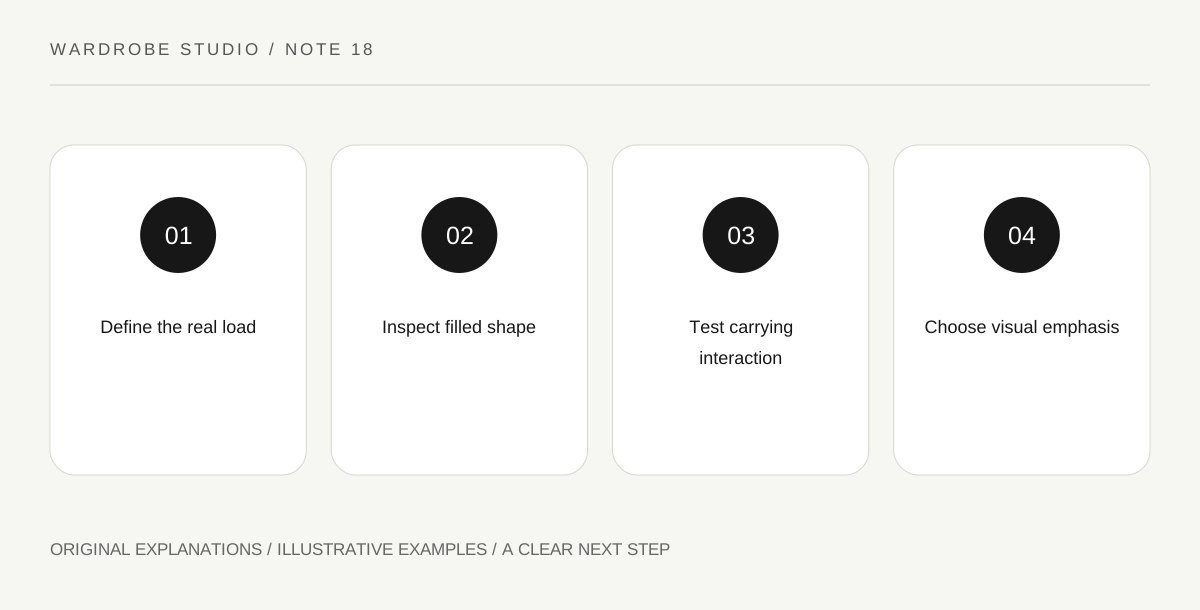
Original explanatory diagram. Read the full method and limitations below.
List the actual contents
Separate essentials from items you carry only occasionally. Place them together and check whether the bag can close normally without distorting. A bag that looks right while empty may bulge, become awkward or lose useful access once filled.
Use the actual items where practical rather than approximate their space with a photograph. Consider how often you need each one and whether compartments help. This is a personal use assessment, not a product-capacity review or a claim that a particular bag will suit every reader.
If you change the load during the day, consider where an extra layer will go; a bag chosen for morning contents may have no room later.
Observe the filled shape
A structured bag may keep a clear outline; a soft one may change with contents. Neither is inherently more polished. Look at the shape you will actually carry, including any visible bulge or folded corner, rather than the idealized empty form.
Compare the filled bag beside the outfit. A rigid rectangle can echo tailoring, while a curved soft bag can contrast with it. The relationship concerns design elements, not a rule that bag size must be assigned according to a person’s height or body category.
Check strap placement and garment interaction
A crossbody strap creates a diagonal line and can compress fabric. A shoulder strap can catch on a sleeve or push a jacket edge. Try the intended carrying position and move normally, including reaching for the items you use most.
If a strap repeatedly slips or causes discomfort, another carrying option or bag may be preferable. Do not accept pain as the cost of completing an outfit. General style advice cannot establish an ergonomic solution, so use your own comfort and any relevant professional guidance for individual needs.
Choose emphasis after function is clear
A brightly coloured bag can be a focal point; a similar value can connect it quietly to the garments. Hardware and texture also contribute, so a neutral colour does not automatically mean the bag is visually subtle. Observe all those details together.
For a comparison, carry the same useful load in two bags you already own if available. Note access, comfort and visual effect separately. The preferred result may change with the day. You do not need a new bag simply because the outfit could support another decorative possibility.
Illustrative carrying study
A wearer plans a day with a book, water bottle and small essentials. A compact rigid bag looks appealing empty but will not close with the load. A soft shoulder bag fits the items but catches on a textured jacket. They choose a simple tote carried by its handles, preserving access and comfort while allowing the jacket to remain the main visual detail.
Practical checks
Optional checkboxes save only in this browser.
Questions that come up
Should small people always choose small bags?
No. Capacity, comfort and the visual effect you enjoy matter more than a body-based rule. A larger or smaller bag can be intentional; try the actual carried version.
Does a neutral bag work with everything?
Not automatically. Shape, hardware, texture, carrying position and practical capacity also affect the result. Neutral colour alone does not settle compatibility.
References and scope
These sources support the factual background. Examples and exercises are original illustrative teaching material. References do not imply endorsement.
- Getty Museum: Principles of design — Vocabulary for visual weight, emphasis, repetition, balance and proportion used in original outfit exercises.
- Getty Museum: Elements of art — Distinguishing line, shape, color value, intensity, space and texture.
- V&A: Secrets of Balenciaga’s construction — Examples showing that pattern cutting, fabric and construction determine garment form; not a prescription for modern outfits.