Style overalls by considering the bib, straps and base layer together
Overalls create a frame over another garment and add straps, pockets and closures. Their fit and visual effect depend on how those parts work together. Choose the base layer for comfort and visible shape, then check ordinary movement rather than relying on a front-facing photograph.
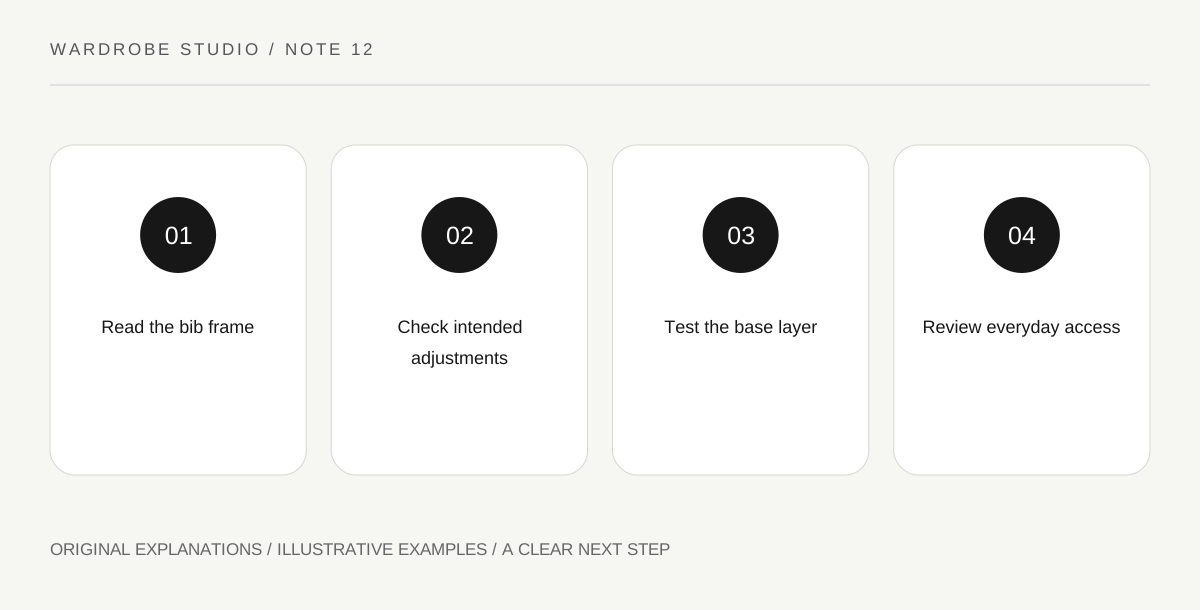
Original explanatory diagram. Read the full method and limitations below.
Read the bib as a visible frame
The bib covers part of the base top while leaving shoulders, sides and sleeves visible. A print that looks busy alone may become a small patterned border beneath overalls. A plain top may make the bib and hardware more prominent. Decide which area you want to lead.
Try the base garment alone, then add the overalls and observe what remains visible. A slogan or decorative panel may be partially hidden in an awkward way, while another detail may appear deliberately framed. The useful question concerns the actual visible portion, not the whole top in isolation.
Adjust only within the garment’s design
Strap adjustment can change the bib position and available torso length. Follow the intended hardware and avoid forcing the garment into a shape that restricts movement. An overall that fits the waist but pulls through the torso may need another size or cut rather than a more elaborate styling solution.
Sit, reach upward and bend as appropriate to your day. Check that straps remain secure without digging or repeatedly slipping. These are personal wearing observations, not a professional fit assessment or durability claim. The complete garment should allow the activity you plan to do.
Choose sleeve volume with the arm openings
A full sleeve may create an appealing contrast with a flat bib, but its fabric needs space near the arm opening. A smooth fitted sleeve can make the straps stand out more clearly. Neither choice is assigned to a body type; they produce different outlines.
Move your arms and notice whether the base layer rides up or catches. If a seam sits under a strap and rubs, try another top. Texture, seams and hardware all affect comfort. The fibre name alone cannot predict how two finished garments will feel together.
Check practical access before finishing details
Consider pockets, closures and restroom use. A decorative outer layer or complex accessory arrangement can make an already multi-step garment less convenient. Choose a bag and other items after you know how the overalls function in your normal routine.
For a useful exercise, compare a striped base with a plain one, keeping the overalls unchanged. Record the visible effect and any difference in movement. A favourite combination should work when you sit, carry your ordinary items and manage the closures, not only when arranged for a mirror view.
Illustrative bib-and-sleeve study
A wearer compares a broad striped shirt and a plain long-sleeved tee beneath denim overalls. The bib hides most stripes, leaving a strong pattern at the sleeves. They enjoy the effect, but the shirt’s sleeve seam catches under a strap. The tee moves more easily, so it becomes the practical choice for a busy day and the shirt remains an optional shorter-wear combination.
Practical checks
Optional checkboxes save only in this browser.
Questions that come up
Can I solve torso pulling by tightening the straps?
Tightening may reduce available length and make the problem worse. Use the garment’s intended adjustment range and consider another cut if movement remains restricted. Styling cannot compensate for an unsuitable fit.
Must overalls have a very plain base layer?
No. Their bib can frame a pattern in an interesting way. Compare the visible areas and actual comfort rather than ban prints or sleeve volume categorically.
References and scope
These sources support the factual background. Examples and exercises are original illustrative teaching material. References do not imply endorsement.
- Getty Museum: Principles of design — Vocabulary for visual weight, emphasis, repetition, balance and proportion used in original outfit exercises.
- Getty Museum: Elements of art — Distinguishing line, shape, color value, intensity, space and texture.
- V&A: Secrets of Balenciaga’s construction — Examples showing that pattern cutting, fabric and construction determine garment form; not a prescription for modern outfits.