Style polka dots by looking at spacing as well as size
A polka-dot garment can feel graphic, playful or quiet depending on more than the diameter of the dots. Notice the background, spacing and contrast, then decide how much repetition you want elsewhere. Build around the particular fabric rather than the idea that all dot prints belong to one style.
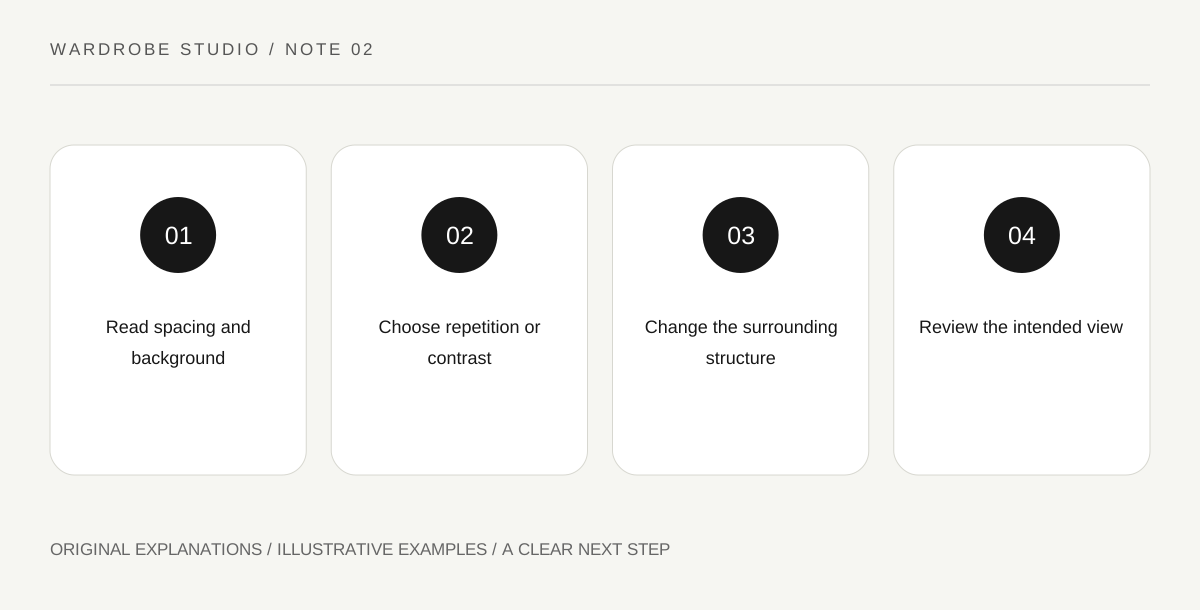
Original explanatory diagram. Read the full method and limitations below.
Read the background as part of the pattern
Wide spaces between dots leave a visible field of colour. Closely packed dots can read almost like texture from a distance. A pale dot on dark cloth produces a different contrast from two similar midtones. Look at the garment from nearby and across the room.
Write a short description before choosing companions: small low-contrast dots with generous spacing, for example. This helps separate the print from a cultural association such as retro. You may enjoy that association, but it is not the garment’s only possible direction.
Decide whether to echo the circular shape
Round earrings, a curved bag or a circular buckle can repeat the dot motif. Using all of them may create more repetition than you want. Choose one echo first and observe whether it helps the outfit feel connected or makes the theme too literal for your taste.
A contrasting angular accessory is another option. A rectangular bag can make the dots feel more graphic by placing circles beside straight edges. Neither relationship is a formula for elegance. It is a way to make an intentional choice rather than add accessories because they happen to be available.
Change the surrounding structure
A dotted blouse with a softly gathered skirt creates one mood; the same blouse with a straight plain trouser creates another. The print stays the same while garment structure changes its setting. This is more informative than replacing the blouse whenever you want a different effect.
Check the actual fabric’s volume and movement. A stiff dotted cloth may hold a shape that a fluid one does not. Museum garments demonstrate how material and construction influence form; your everyday exercise applies that observation without claiming to reproduce a historical silhouette.
Check the dots in the intended view
Tiny repeated patterns can look different in photographs or video than to the eye. If the outfit is for a recorded call, check it on the actual camera rather than assume the mirror view predicts the result. You can prefer one garment for in-person wear and another for a screen.
For a practical comparison, make one outfit with a single curved accessory and another with an angular one. Keep the remaining pieces constant. Note whether the change affects the mood you wanted. The result is a personal styling observation, not evidence that one dot size suits a whole category of people.
Illustrative dot study
A wearer has a black blouse with widely spaced ivory dots. They first add round earrings and a curved bag, then remove the earrings and use a rectangular bag. The second arrangement feels less themed to them. They keep the blouse and change the accessory relationship, learning that the problem was repeated shape rather than the dot print itself.
Practical checks
Optional checkboxes save only in this browser.
Questions that come up
Are polka dots always vintage-looking?
No. Their surroundings, colour, spacing and construction change the impression. You can emphasize a historical association or place the garment among more geometric or minimal pieces without treating either approach as compulsory.
Should small dots be reserved for small people?
No such body-based rule is necessary. Consider the effect you enjoy, the garment’s fit and the setting. Print scale is a design choice rather than a requirement assigned by body size.
References and scope
These sources support the factual background. Examples and exercises are original illustrative teaching material. References do not imply endorsement.
- Getty Museum: Principles of design — Vocabulary for visual weight, emphasis, repetition, balance and proportion used in original outfit exercises.
- Getty Museum: Elements of art — Distinguishing line, shape, color value, intensity, space and texture.
- V&A: Secrets of Balenciaga’s construction — Examples showing that pattern cutting, fabric and construction determine garment form; not a prescription for modern outfits.