Pattern studies3 min read
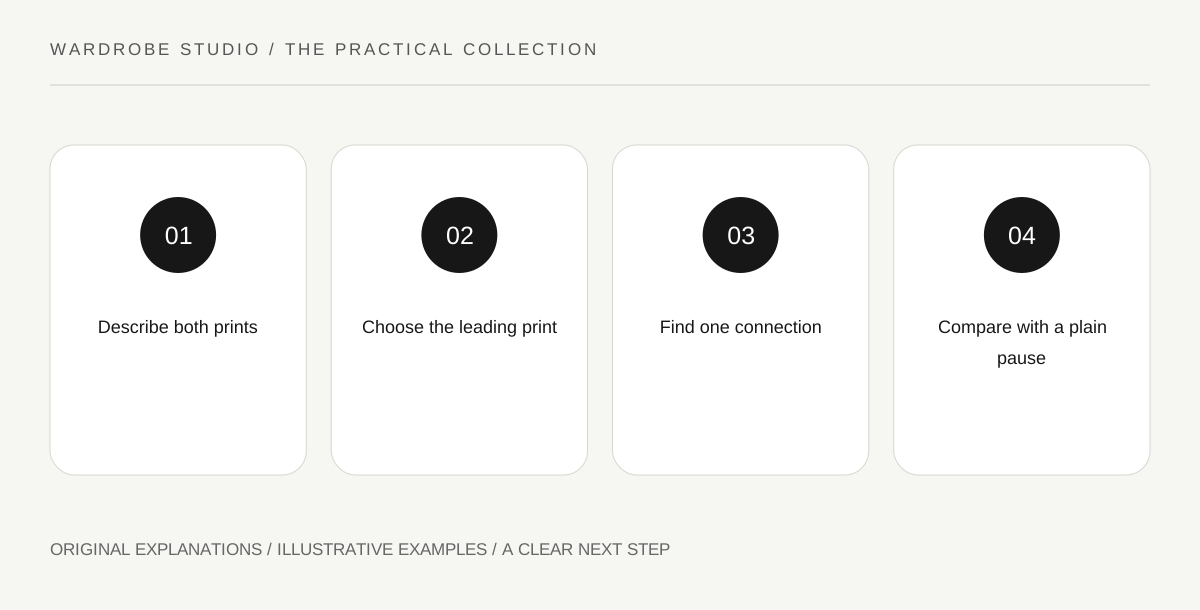
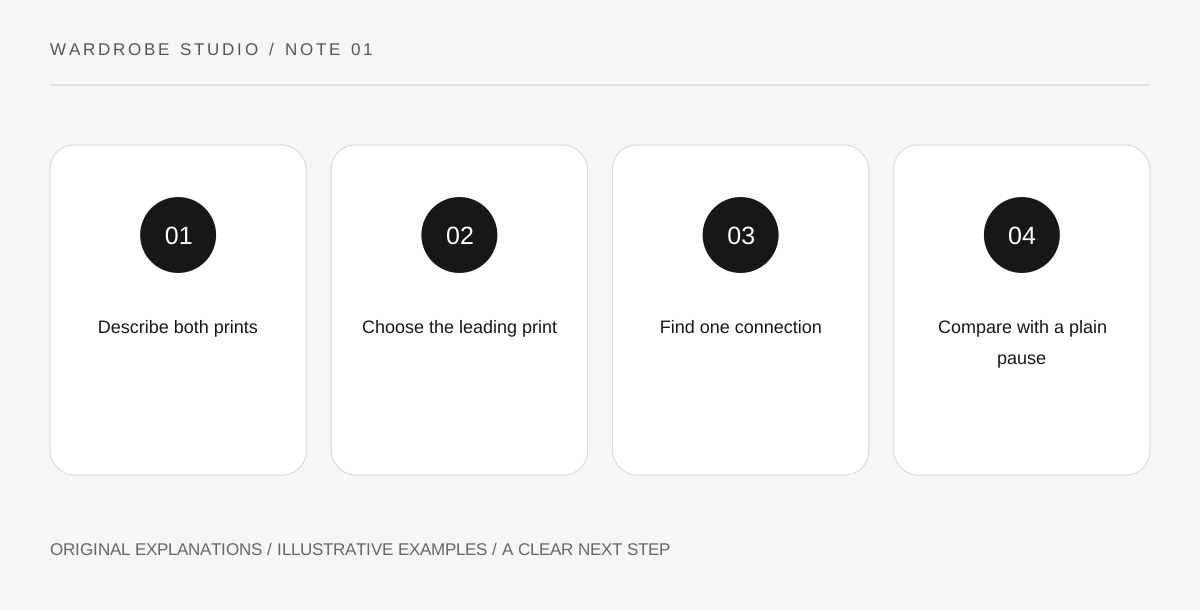
Stripes and florals can share an outfit without becoming identical. Begin by choosing the print you want to notice first, then use scale, spacing and colour to organize the relationship. The exercise is about personal preference, not a rule that certain bodies should avoid particular patterns.
Read the guide ↗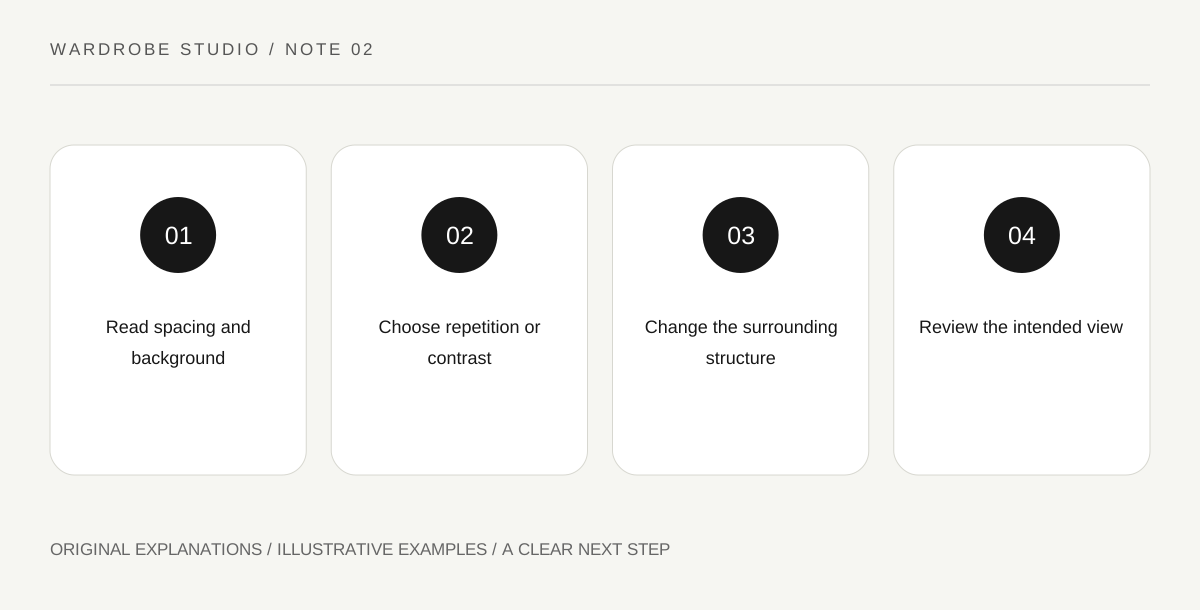
Pattern studies3 min read
A polka-dot garment can feel graphic, playful or quiet depending on more than the diameter of the dots. Notice the background, spacing and contrast, then decide how much repetition you want elsewhere. Build around the particular fabric rather than the idea that all dot prints belong to one style.
Read the guide ↗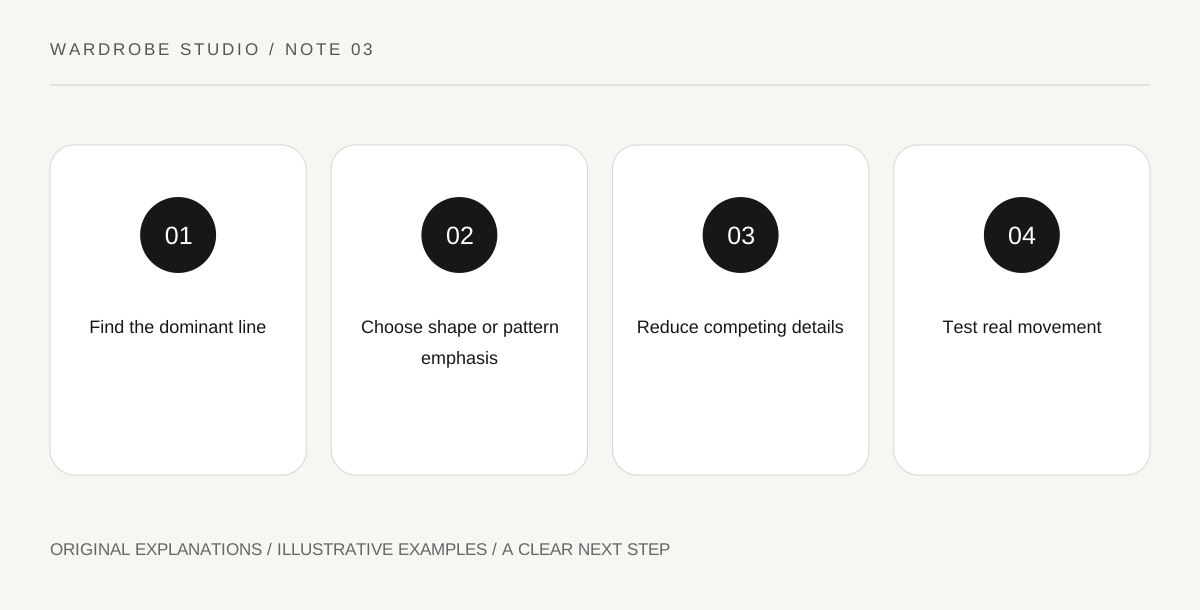
Pattern studies3 min read
A checked blazer contains several design decisions already: crossing lines, background colour, tailoring and buttons. Identify which feature you want to emphasize before adding another focal point. The goal is to make the blazer useful in your own wardrobe, with comfortable movement and a level of formality suited to the setting.
Read the guide ↗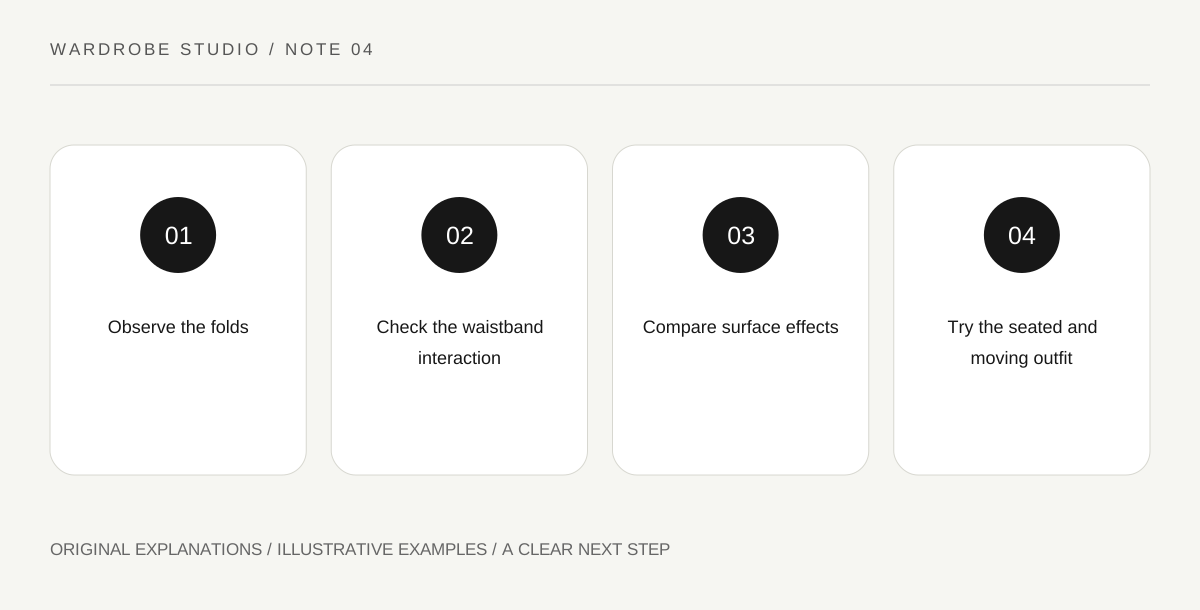
Garment shapes3 min read
Pleats create a changing surface: narrow folds while still, wider areas during movement. Build the outfit around that behavior rather than a single standing photograph. Check the waistband, seated comfort and how the pleats recover, then choose a top that supports the degree of movement you enjoy.
Read the guide ↗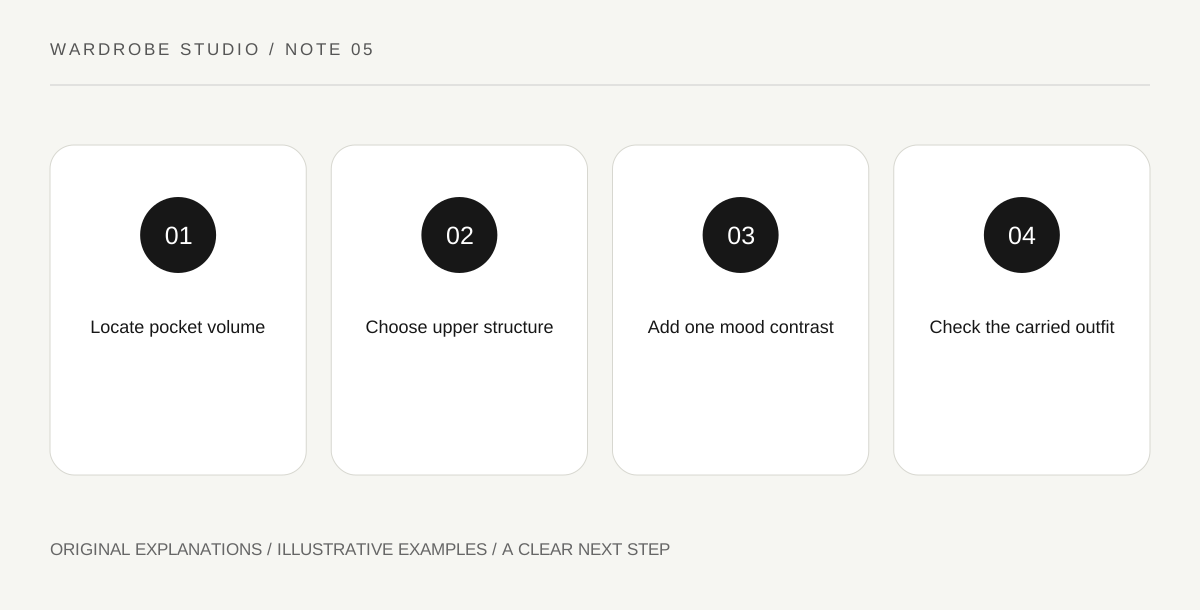
Garment shapes3 min read
Cargo trousers add three-dimensional pockets as well as a relaxed outline. Their position and fullness affect the outfit, especially when the pockets are used. Choose the rest of the combination around the actual garment and the day’s tasks rather than assuming every utility style must look rugged.
Read the guide ↗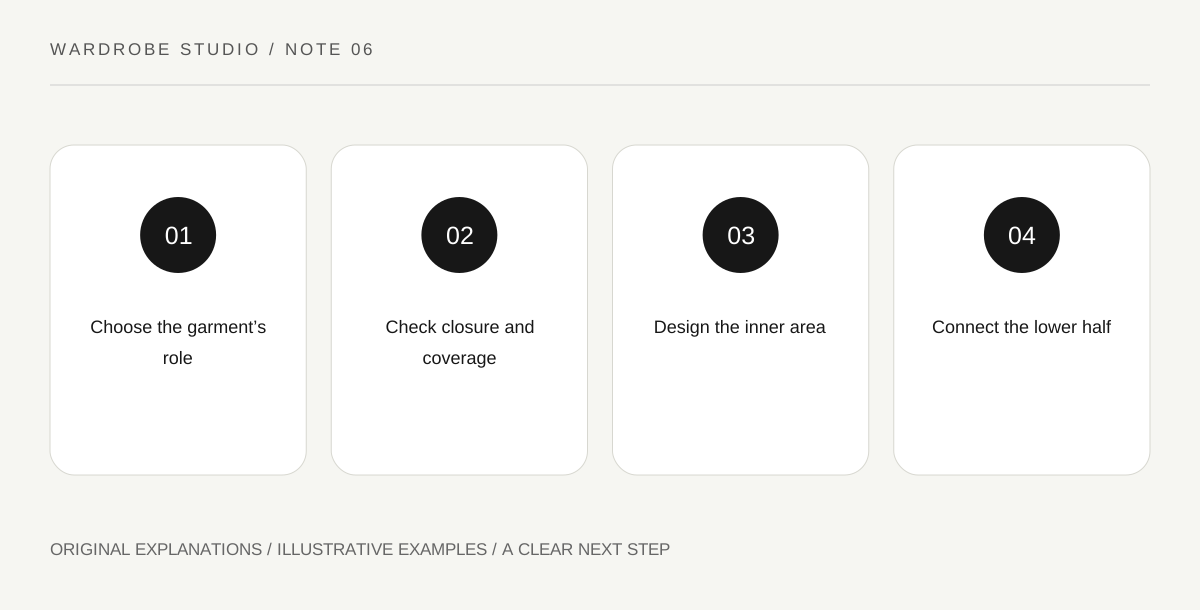
Garment shapes3 min read
A tailored waistcoat can function as a top or as a layer, but the same garment may not fit both jobs comfortably. Check armholes, closure tension and coverage before styling around it. Then choose the visible inner area and trouser or skirt relationship that suits the design.
Read the guide ↗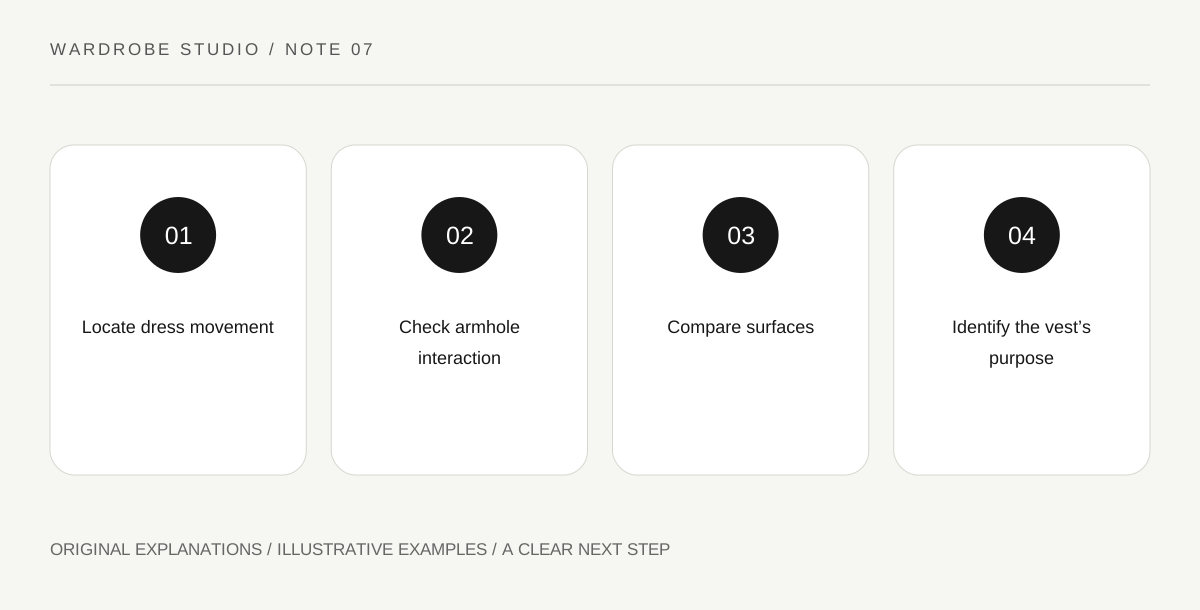
Texture and layers3 min read
A knitted vest changes which parts of a dress remain visible and how its fabric moves. Treat the two garments as a system rather than assume they will layer comfortably because both fit separately. Check the armholes, waist area and surface friction before deciding whether the combination works.
Read the guide ↗
Texture and layers3 min read
A slip-style dress often has fluid lines and narrow straps. A shirt can introduce a collar, sleeves and a more defined edge, but it also changes movement and coverage. Explore the relationship without assuming the dress must be made more modest, formal or universally wearable.
Read the guide ↗
Garment shapes3 min read
A denim skirt is a structured garment, and its ease of movement depends on cut, openings and fabric rather than wash alone. Build an outfit after checking how the skirt behaves when walking and sitting. Then choose the kind of upper shape that works with its actual outline.
Read the guide ↗
Garment shapes3 min read
A tunic-and-trouser combination creates several visible horizontal and vertical edges. Instead of applying a fixed ratio, look at where those edges land and whether the layers move independently. The aim is an outline you enjoy and enough ease for everyday tasks, with no requirement to disguise your shape.
Read the guide ↗
Garment shapes3 min read
A matching set can work as a complete composition and as individual garments. Before separating it, identify the features that connect the pieces and the features each can carry alone. The aim is to discover practical combinations, rather than assume every top and bottom must produce the same number of outfits.
Read the guide ↗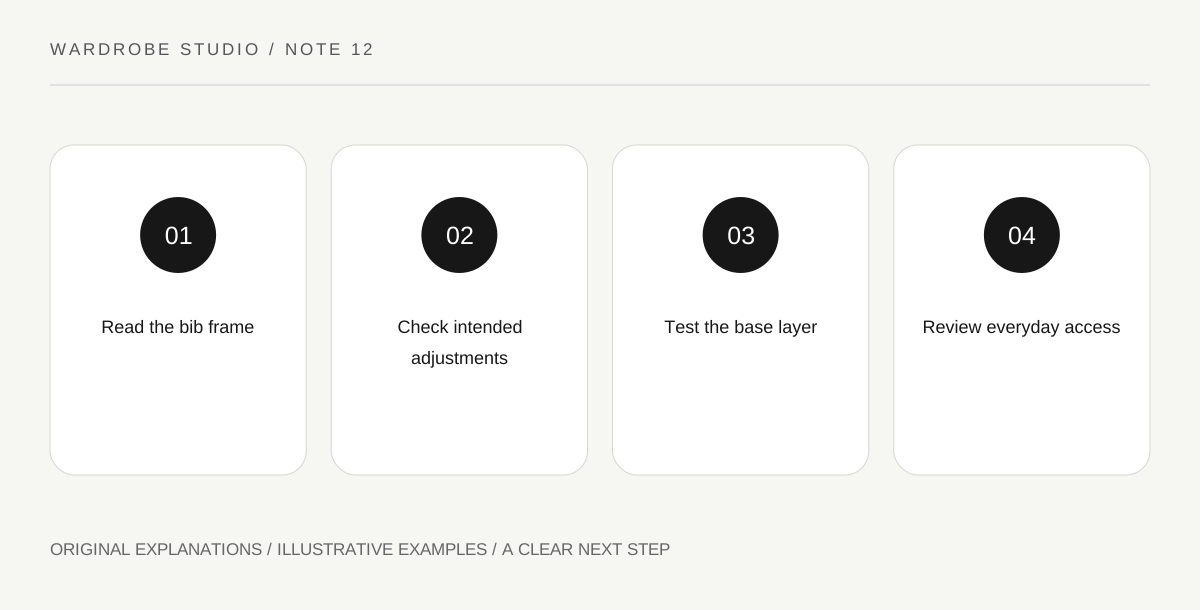
Garment shapes3 min read
Overalls create a frame over another garment and add straps, pockets and closures. Their fit and visual effect depend on how those parts work together. Choose the base layer for comfort and visible shape, then check ordinary movement rather than relying on a front-facing photograph.
Read the guide ↗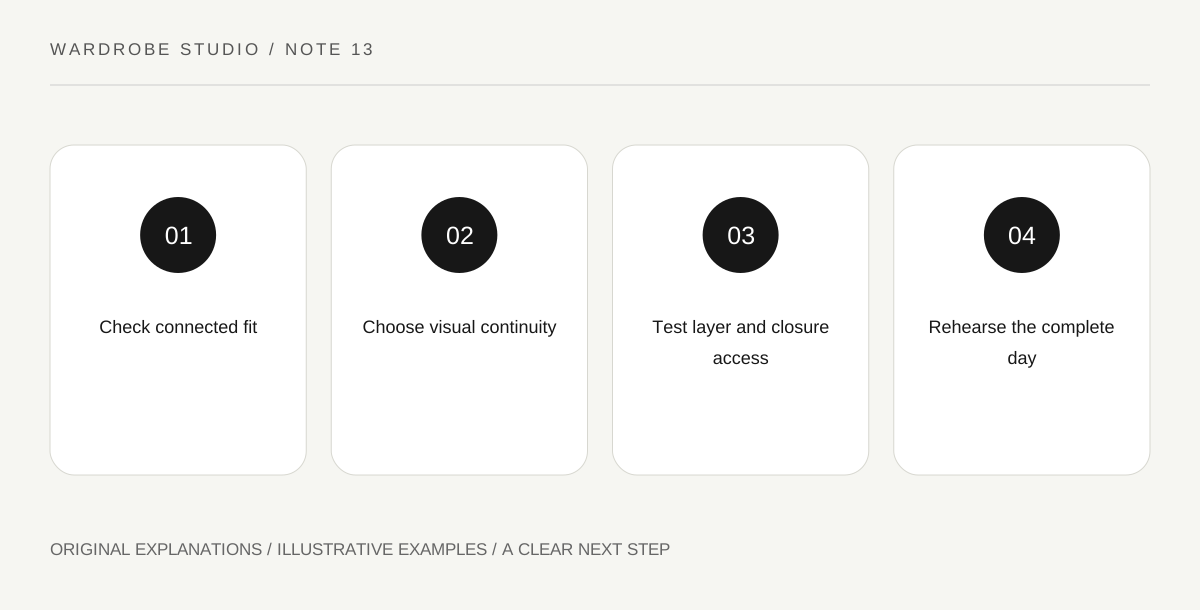
Garment shapes3 min read
A jumpsuit provides a continuous garment shape, but it also connects fit and movement across the torso and legs. Assess that complete relationship before adding layers or accessories. A practical outfit includes sitting, reaching and restroom access as well as the appearance you see while standing.
Read the guide ↗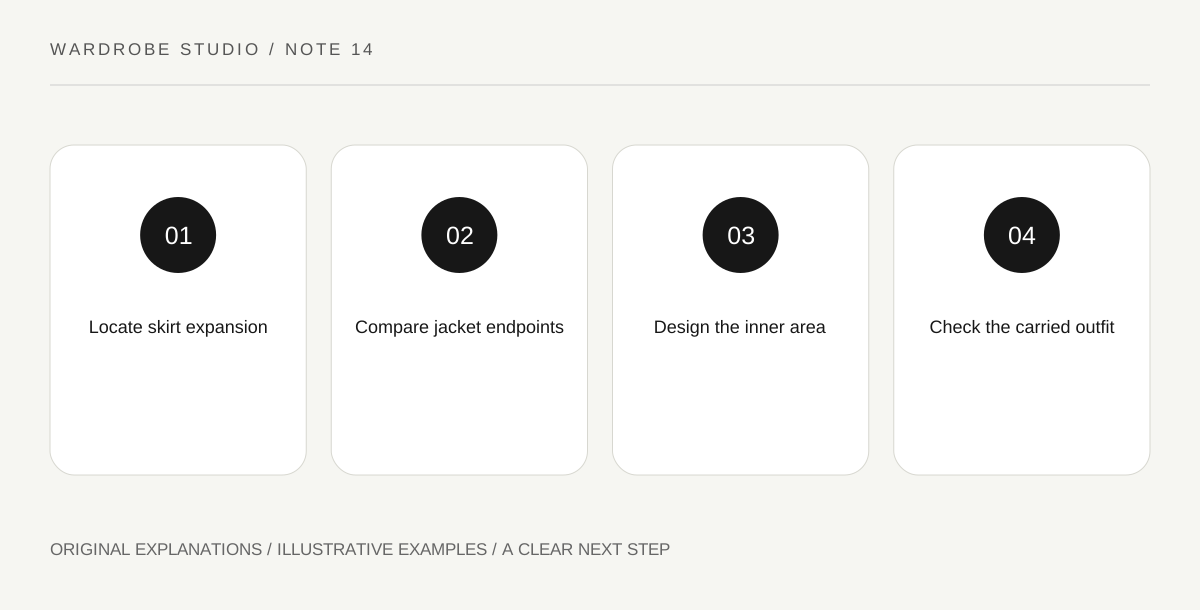
Garment shapes3 min read
A short jacket and an expanding skirt can create a clear two-part outline, but their relationship depends on the exact lengths and fabrics. Look at where the jacket ends and the skirt begins to widen. Use those observations to choose a combination rather than rely on a fixed proportion formula.
Read the guide ↗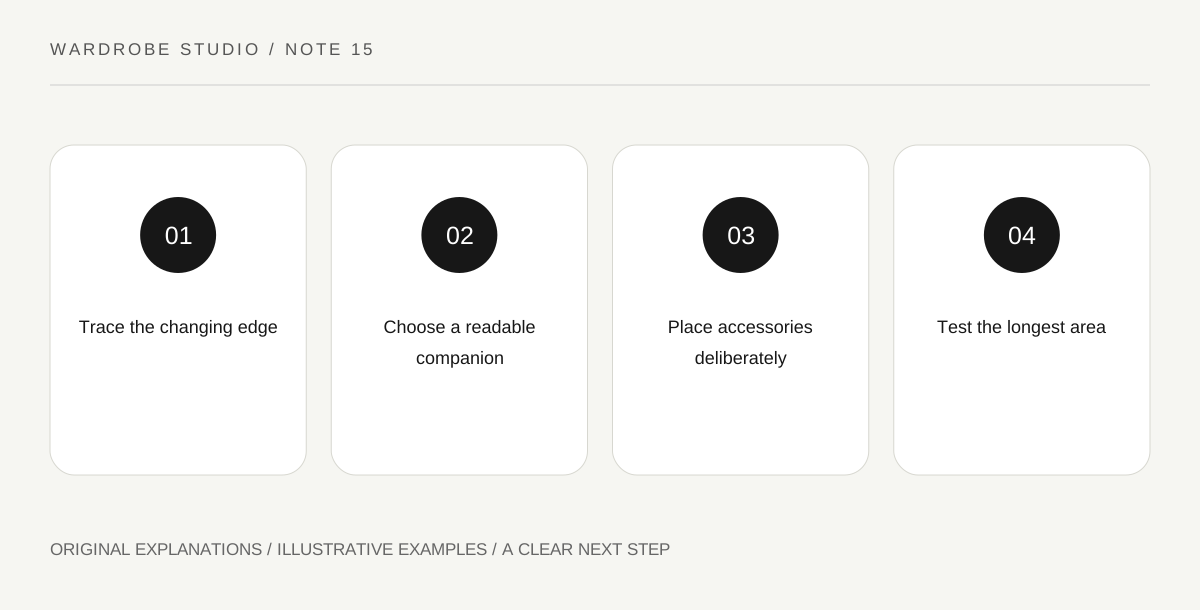
Garment shapes3 min read
An asymmetric hem creates different lengths and directions within one garment. Rather than trying to make both sides appear equal, decide how you want that movement to read. Keep the rest of the outfit understandable and check the longest edge during the activities you actually need to do.
Read the guide ↗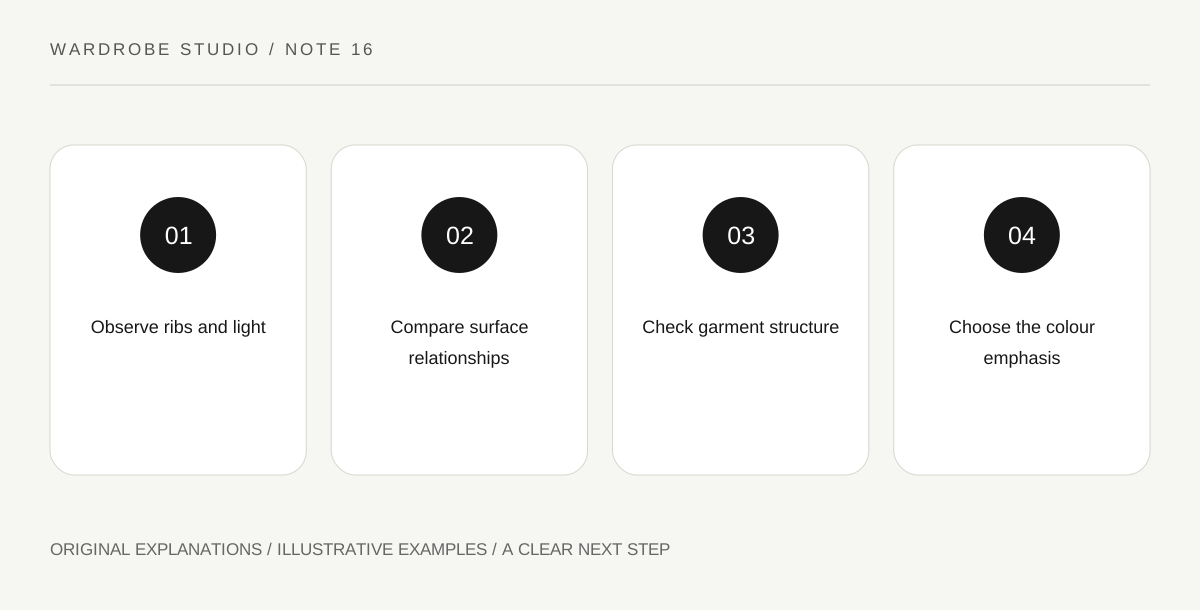
Texture and layers3 min read
Corduroy’s raised ribs contribute a visible surface that changes with light and direction. It can be part of many personal styles, not only a fixed autumn palette. Compare its texture with other garments and decide whether you want a quiet continuation or a stronger surface contrast.
Read the guide ↗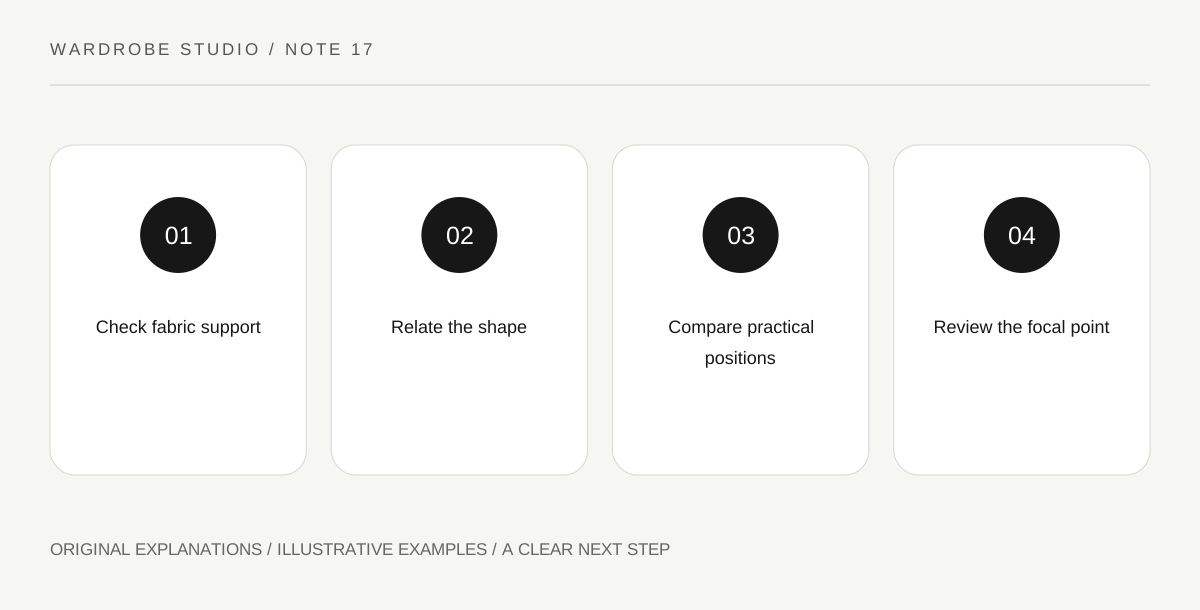
Finishing details3 min read
A brooch adds a focal point and a physical load. Choose its location by considering fabric support, closures and the way the garment moves. A small placement exercise can reveal more than buying another accessory, while protecting pieces that may not tolerate pinning or weight.
Read the guide ↗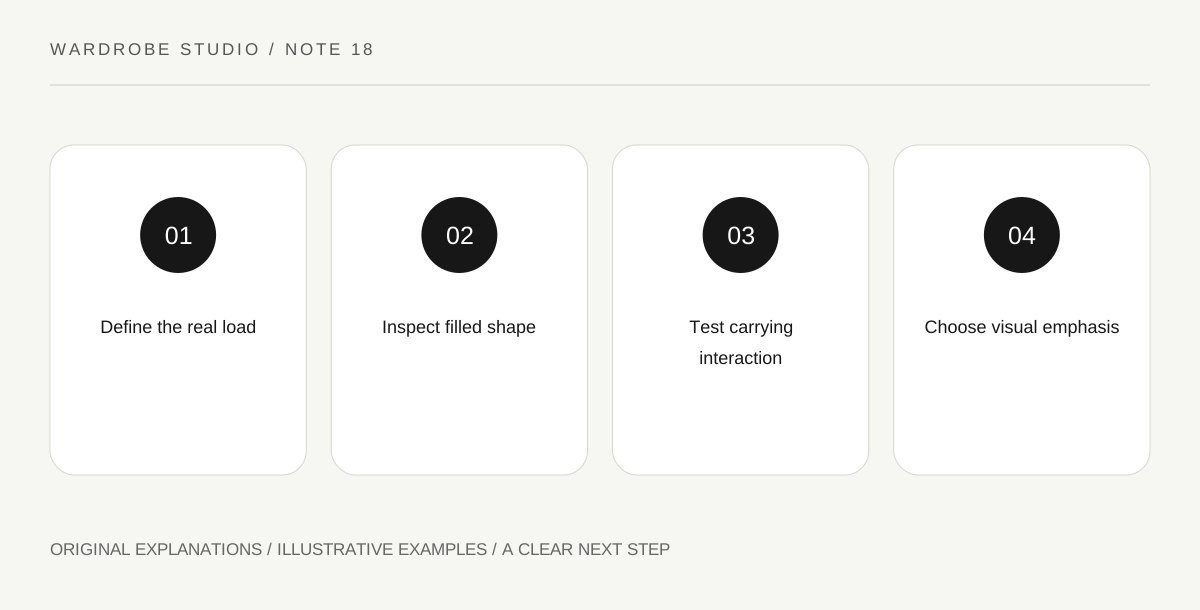
Finishing details3 min read
A bag affects an outfit through shape, placement and the way it is carried. It also needs to hold the day’s real items. Begin with that practical requirement, then decide whether the bag should create a clear geometric detail or sit quietly within the rest of the composition.
Read the guide ↗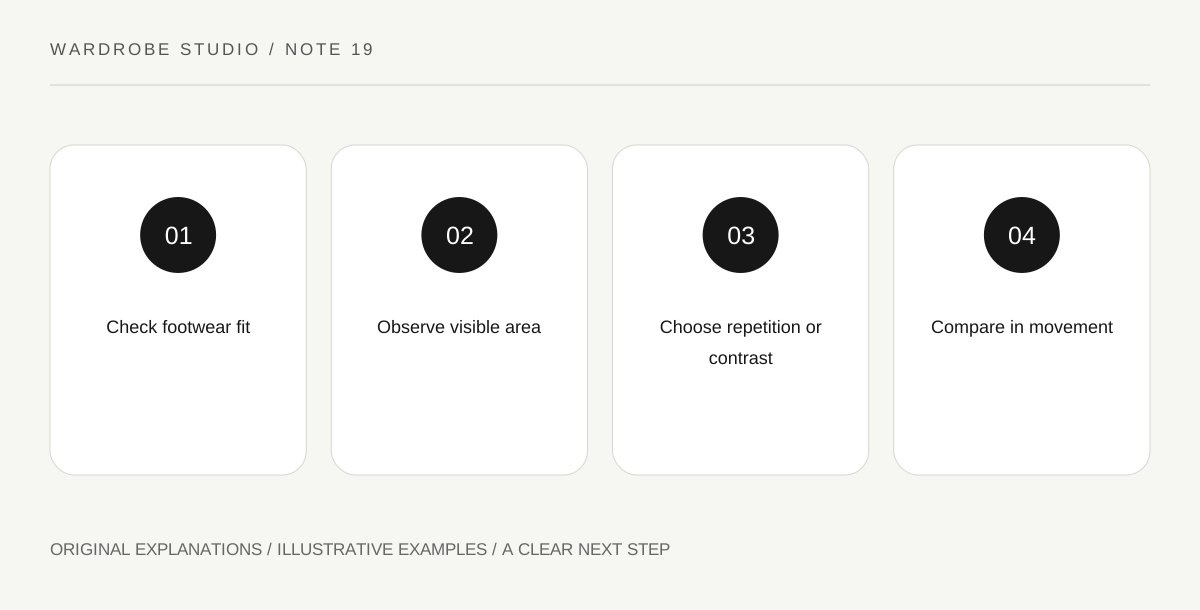
Finishing details3 min read
Visible socks create a small area of colour and texture between clothing and shoes. Treat that area as part of the outfit rather than an accidental gap. Check fit inside the actual footwear first, then decide whether the socks should repeat a detail, create contrast or remain visually quiet.
Read the guide ↗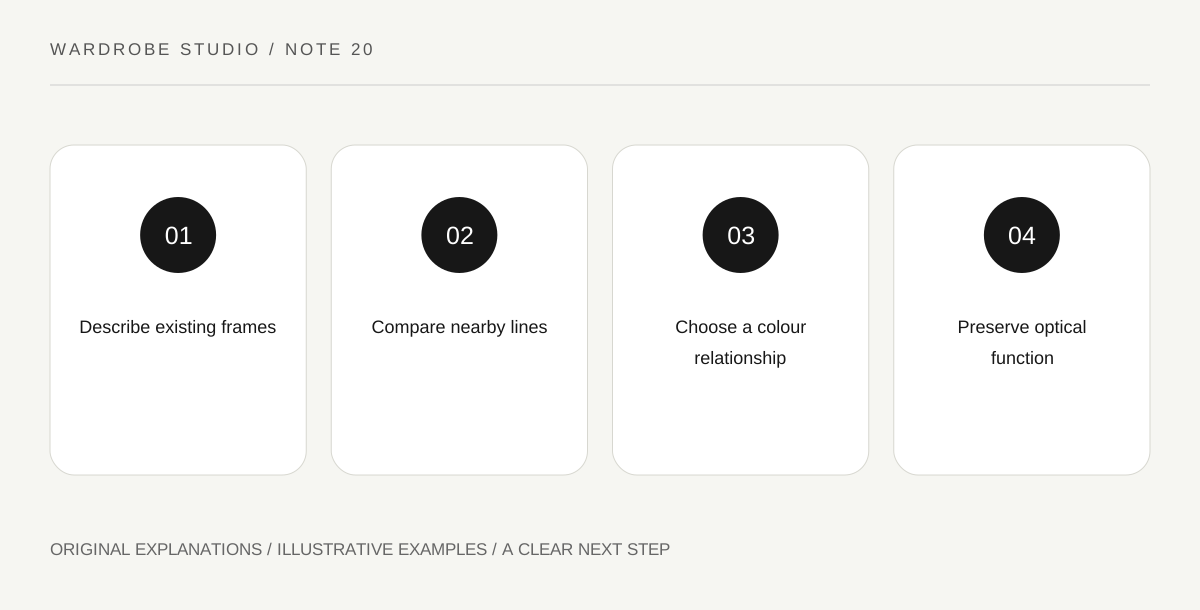
Finishing details3 min read
Glasses can be a consistent visible feature of an outfit. Work with the frames you already use by noticing their shape, colour and visual weight, then decide how other details relate. This is a styling exercise, separate from choosing lenses, assessing vision or adjusting optical fit.
Read the guide ↗